Foundation cracks are commonplace in Phoenix. In many cases, it is nothing more than a byproduct of how concrete cures and how Valley soil behaves. In others, it is an early sign of movement that deserves attention.
AJF inspectors have completed more than 120,000 inspections across the Valley since 1996. One of the questions we hear most often is a simple one: is this crack normal? The answer is that it depends. Let’s crack into why!
Why Do Foundations Crack in Arizona?
Concrete Curing and Shrinkage
All concrete shrinks as it cures. That shrinkage creates tension, and the slab relieves it by cracking. Builders cut control joints into slabs to guide where this happens. Thin cracks that appear in the first few years are common and are rarely a structural concern.
Expansive Clay Soil

Much of the Phoenix area sits on expansive soil. It swells when it absorbs water and shrinks as it dries. A monsoon storm can saturate the ground around a home in an afternoon. Weeks of triple-digit heat then dry it back out. Repeated over many years, that cycle can move a foundation.
We see the same pattern in exterior stucco, which is covered in our guide to stucco cracks in Phoenix homes.
Irrigation and Poor Drainage
Water is the most controllable factor. Planters, irrigation lines, and downspouts that discharge next to the foundation keep the soil along the perimeter wetter than the soil farther out. That uneven moisture is a common contributor to movement.
Caliche and Poorly Compacted Fill
Many Valley lots have a hard caliche layer below the surface. It can slow drainage and trap water near a foundation. Additionally, soil that was not properly compacted during construction can settle over time. While these conditions are not visible during a home inspection, inspectors can identify their effects.
Which Foundation Cracks Are Normal in Phoenix?
Hairline Cracks
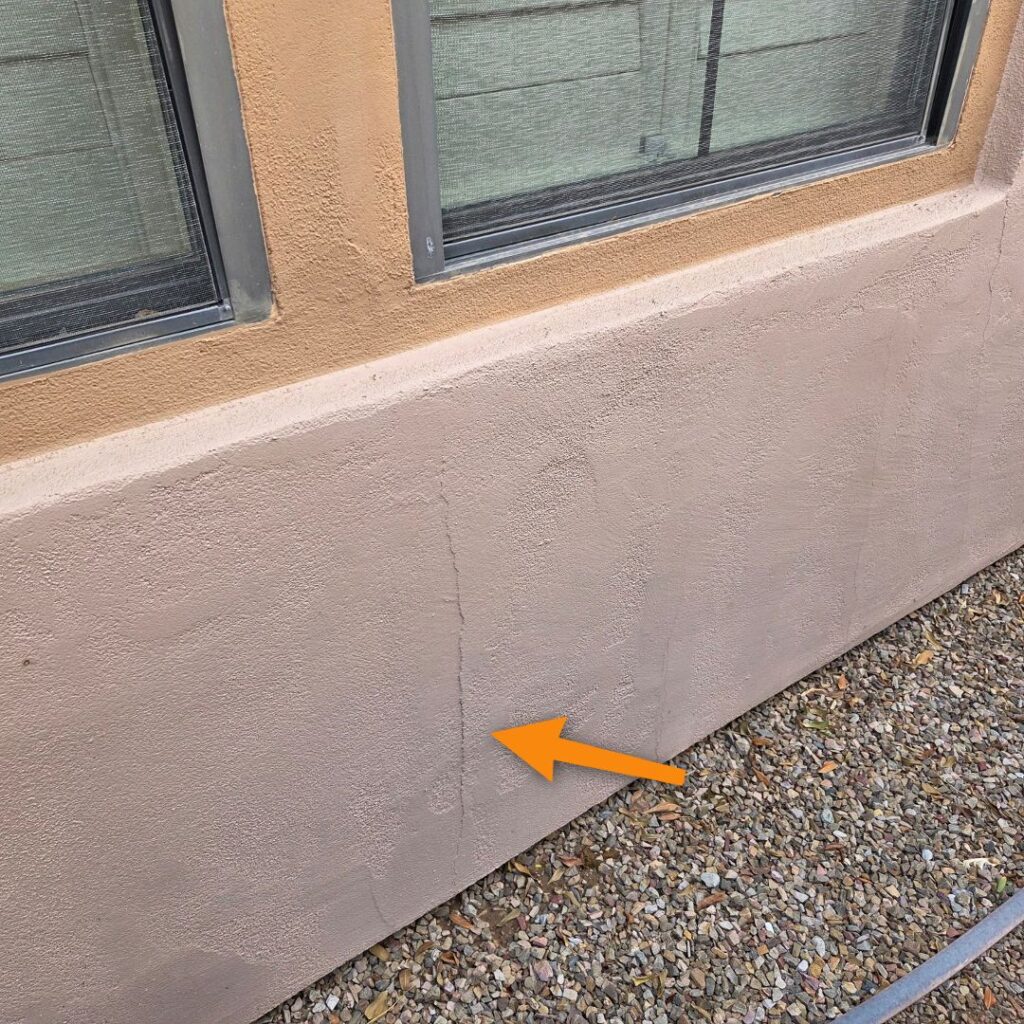
Cracks narrower than about 1/8 of an inch, with both sides at the same height, are usually cosmetic. They are common in slabs, stem walls, and block walls. These should be monitored, but not ignored.
Wider Cracks
Once a crack grows beyond roughly 1/8 of an inch, it deserves a closer look. A crack that is noticeably wider than it was six months ago is more important than its absolute width.
Stair-Step and Diagonal Cracks
Cracks that follow the mortar joints of a block wall in a stair-step pattern are a recognized sign of differential movement. Diagonal cracks running from the corners of windows and doors point to the same thing.
Horizontal Cracks
Horizontal cracks in a stem wall or block wall can indicate pressure from soil or moisture against the wall. We note these at any width in the final inspection report.
Signs That Often Accompany a Serious Crack
A foundation crack rarely appears alone when movement is involved. Look for:
- Doors or windows that stick or no longer latch
- Cracks in drywall, especially at the corners of doors and windows
- Cracked floor tile that follows a line
- Gaps between baseboards and the floor, or between walls and the ceiling
Foundation Cracks in Arizona: What Do Inspectors Look For?
During a standard inspection, our inspectors evaluate the foundation from the outside-in.
- Exterior grading and drainage
- The complexion of the cracks
- Interior symptoms like drywall cracking or gaps in trim
- Related exterior damage like stucco cracking
Many newer Valley homes are built on post-tensioned slabs. These use steel cables to keep the slab in compression and are designed to resist soil movement. They are not immune to it, and cracking in walls, tile, and finishes can still occur.
What Home Inspectors Do Not Do
A home inspection is a visual evaluation. We do not test soil, and we cannot see inside a slab or below grade. We do not evaluate post-tension cables, and we cannot say with certainty what caused a crack. Geologic conditions such as ground subsidence or earth fissures are outside the scope of an inspection. When a crack shows signs of active movement, we recommend evaluation by a structural engineer.
What Should You Do About Foundation Cracks?
-
Document and Monitor
Photograph the crack with a coin or ruler beside it. Mark each end with a pencil and note the date. Check it again after the monsoon season and again after the dry months.
-
Correct the Water Problem
Extend downspouts, restore the slope away from the foundation, and keep irrigation off the perimeter. These fixes cost far less than structural repair and address a common cause.
-
Seal Hairline Cracks
A flexible sealant can keep moisture out of a hairline crack. This is a maintenance step, not a structural repair.
-
Call a Professional
A structural engineer should evaluate cracks that are wide, growing, stair-step, horizontal or displaced. This applies to buyers during the inspection period and to sellers considering a pre-listing inspection.
If the home is new, cracks that appear in the first year may be a builder warranty issue. Read our article on when to schedule a warranty inspection in Phoenix.
Frequently Asked Questions
Are foundation cracks normal in Arizona?
Hairline cracks are common and usually cosmetic. Wider, growing, stair-step, horizontal or displaced cracks are not routine and should be evaluated.
What size foundation crack should I worry about?
A crack wider than about 1/8 of an inch, or one that is getting wider, warrants a closer look. Pattern and displacement matter as much as width.
Should I walk away from a home with foundation cracks?
Not automatically. Many Valley homes show some cracking. Have the inspector’s findings reviewed by a structural engineer if they raise concern, and use that information to negotiate.
Most foundation cracks in Arizona are minor. The ones that are not tend to follow a pattern, and that pattern is what a thorough inspection is designed to identify.